- 0493 435 838
- enquiries@websitedesignsagency.com.au
- 2/29 Princes Hwy Service Road Dandenong, VIC 3175
Understanding NDIS website accessibility requirements is essential for disability support organisations building websites that are inclusive and easy to use for participants.
NDIS participants may access websites using assistive technologies such as:
A properly designed NDIS accessible website ensures participants, families, and support coordinators can easily access information about services and supports.
Starting from
Enterprise builds
Weeks to launch
NDIS provider websites should follow recognised accessibility standards such as:
Providers planning accessibility improvements may also explore our NDIS Website Accessibility Design Services
The price of an NDIS provider website depends on several factors including website size, accessibility requirements, and the number of services offered by the organisation.
A well-structured website helps organisations clearly communicate the supports they provide, the locations they service, and the ways participants can contact them. At the same time, the website must remain accessible for participants using assistive technologies and structured in a way that supports search visibility and participant discovery.
Most organisations exploring NDIS website pricing in Australia want a solution that balances accessibility, usability, and affordability while ensuring the website clearly explains available services.
Disability support providers typically require websites that help participants quickly understand:
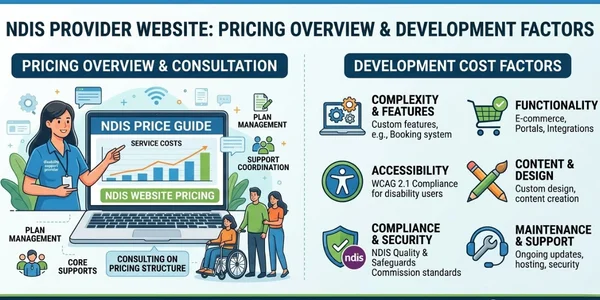
Typical factors influencing NDIS website pricing include:
Many organisations researching website development begin by understanding the NDIS website design cost and then compare development options based on their requirements. Our team specialises in building structured websites for disability support organisations through our NDIS Website Design Services.
The following table outlines common components included in a professionally structured NDIS provider website. This structure helps organisations communicate services clearly while providing strong usability signals for search engines.
| Website Component | Purpose | Status |
|---|---|---|
| Service pages | Communicate NDIS supports clearly | ✓ Included |
| Accessible navigation | Supports participants using assistive technologies | ✓ Included |
| Enquiry forms | Enable participant and referral contact | ✓ Included |
| SEO optimisation | Improve search visibility | ✓ Included |
| Mobile responsive design | Improve usability across devices | ✓ Included |
| Policy pages | Improve transparency and compliance | ✓ Included |
The cost of an NDIS provider website can vary depending on the complexity of the website and the services the organisation provides.
Providers offering multiple supports require additional service pages to explain each service clearly.
NDIS websites often require accessibility features aligned with the Web Content Accessibility Guidelines (WCAG 2.1) to support participants using assistive technologies.
Clear website content helps participants and families understand services and improves trust in the organisation.
Contact forms allow participants and support coordinators to easily connect with providers.
Many providers invest in SEO features to help participants searching online discover their services.
Providers planning a complete website upgrade may also explore our NDIS Website Redesign Services.
Many disability support organisations compare NDIS website packages when evaluating website development options. Providers often begin by reviewing NDIS website design cost and then compare packages that match their organisation’s services and future growth plans.
Packages typically vary depending on number of service pages, accessibility implementation, SEO optimisation features, enquiry forms and integrations, and ongoing support and maintenance. Explore available options in our NDIS Website Packages Guide.
A professionally designed website allows disability support organisations to clearly communicate their services while helping participants find the support they need.
Websites with clear navigation and accessible content also perform better in search engines because they provide strong usability signals.
A well-designed website improves participant discovery of services, referral opportunities from support coordinators, organisational credibility, and digital visibility for disability providers.
A structured website can deliver measurable improvements for disability support providers.
Participants can easily find information about available supports.
Support coordinators can quickly review services and refer participants.
Professional websites strengthen credibility with families and carers.
Optimised websites perform better in search engines and attract more enquiries.
Our structured development process ensures disability providers receive websites designed for clarity, accessibility, and performance.
We define the website structure and service pages required to clearly communicate supports.
User-friendly layouts are created to help participants easily locate service information.
The website is built using modern frameworks that support accessibility and mobile responsiveness.
Before launch, the website is tested to ensure strong performance across devices.
Care Hub 24/7 required a structured website to clearly communicate services and improve participant enquiries. After implementing a new website structure, the organisation experienced improved enquiry engagement and stronger online visibility.
Care Hub 24/7
NDIS Provider
WordPress

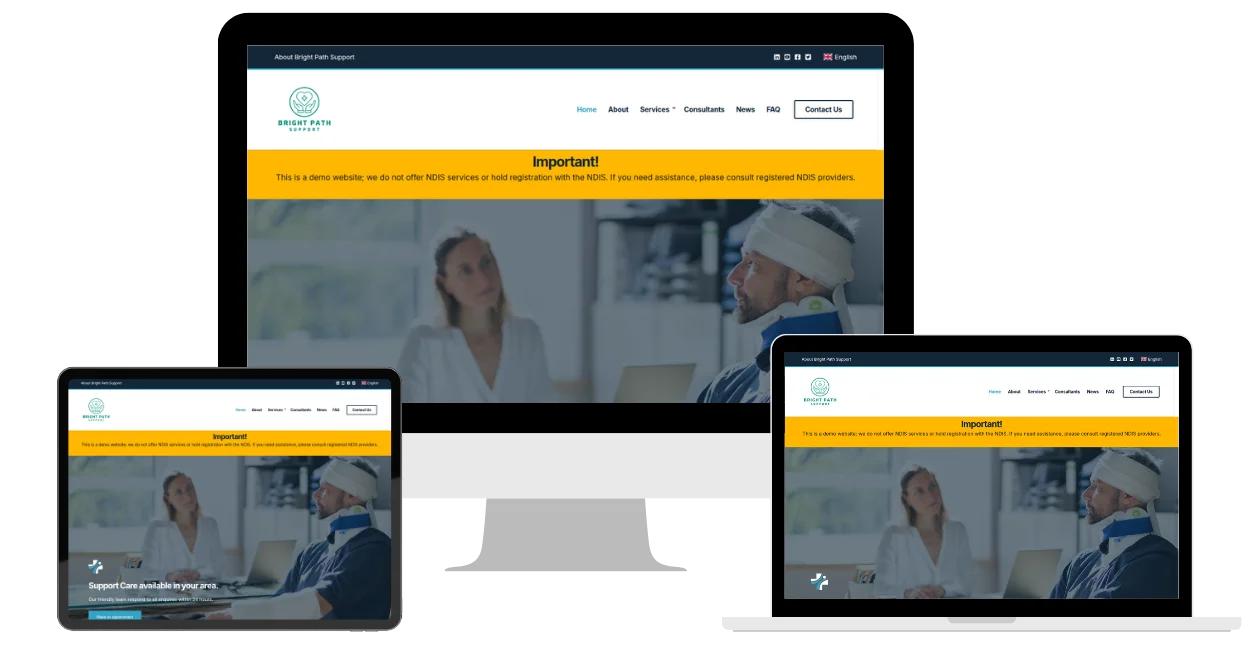
Project name: Bright Path Support (DEMO)
Category: Health Support Provider Demo
Technology: WordPress
Skills: Elementor
Website: www.brightpathsupport.com.au
Planning a provider website involves understanding accessibility requirements, compliance considerations, and service communication. Helpful resources include:
Providers planning a new website may also explore:
Our website development services support disability providers across Australia. We work with organisations in:
Each website is built to clearly communicate services while supporting accessibility, participant engagement, and search visibility.
When planning the NDIS website design cost, many disability support organisations compare different website options before choosing the most suitable solution.
Depending on the organisation’s goals, providers may explore website redesign, accessibility improvements, or ongoing search visibility strategies.
You may also explore:
Most accessible websites align with WCAG 2.1 guidelines.
Accessible websites ensure participants using assistive technologies can access service information easily.
If your organisation is planning a new website and wants to better understand NDIS website pricing, our team can help. We build structured websites designed specifically for disability support providers that clearly communicate services and support participant enquiries.
Book a consultation to discuss NDIS accessible website design.
Partner with Melbourne’s SEO experts for fast, SEO-optimised, brand-true websites that are simple to navigate and built to perform.